


The ginkgo trees along the Forbidden City moat have turned a deep, luminous gold, and the first northwest wind carries the faint promise of northern winter. For overseas Chinese families returning with children and grandparents, and for international travelers curious about China before heading to Harbin's ice festivals, Beijing in November occupies a rare in-between season. It is not yet the full theatre of a Northeast winter, but it is no longer the soft warmth of early autumn either. The city feels quieter, the light turns amber earlier in the afternoon, and the pace of daily life slows just enough to make a family trip feel less like a race and more like a reunion.
This guide answers the question we hear most often at this time of year: What is Beijing actually like in late autumn, and is it a good family destination? The short answer is yes, if you dress for the transition, keep outdoor blocks short, and treat museums and teahouses as part of the itinerary rather than afterthoughts. Below is a practical, family-paced plan that works for multi-generational groups and mixed-culture families.
November in Beijing: Weather, Light, and Daily Rhythm
By November, Beijing has stepped out of the golden-autumn postcard and into a cooler, more restrained mood. Daytime temperatures feel brisk and require a proper coat, while evenings and early mornings can dip below freezing. The dry continental air means that sunshine often feels sharper than the thermometer suggests, and a gusty northwest wind can sweep through the city for a day or two after a cold front passes, making open squares and the exposed ridges of the Great Wall feel significantly colder than sheltered hutong lanes.
Air quality in November is mixed. The summer haze has usually lifted, and clear, pale-blue days are common, especially after a northerly wind. Still, calm periods can trap particulates over the plain, so families with asthma or very young children should keep indoor backup plans ready. We generally advise clients to check the daily AQI before scheduling the Great Wall and to keep a museum or palace visit as a flexible swap-in.
The biggest planning factor is daylight. Days are noticeably shorter than in October, and the warm afternoon light fades early. For a family group, this means:
- Schedule outdoor monuments in the late morning and early afternoon, when everyone is warmest and the light is best.
- Plan to be inside a museum, teahouse, or restaurant by mid-to-late afternoon.
- Avoid sunrise departures unless your family are genuinely early risers; the cold mornings are hard on elders and small children.
- Use the long evenings for a relaxed Peking duck dinner, an acrobatics show, or a slow walk through a heated shopping courtyard.
A 3–4 Day Family Itinerary for Late Autumn Beijing
This itinerary is built around the idea that Beijing should be explored in short, digestible blocks. Each day pairs one major outdoor site with a warm indoor retreat, leaving room for grandparents to rest and for children to burn off energy safely.
Day 1 — The Forbidden City and a Warm Museum Afternoon
Begin at the Forbidden City, entering through Tiananmen Gate and moving north at a relaxed pace. In November the crowds thin out, especially on weekday mornings, and the ginkgo and cypress colors against the vermilion walls make this one of the most photogenic months of the year. For children and foreign spouses, a good guide makes the difference between a long walk past empty halls and a living story about emperors, exams, and palace life. We recommend a two-and-a-half to three-hour visit with regular warm-up stops in the covered corridors.
After exiting at the Gate of Divine Might, cross the road to Jingshan Park only if the group has energy; otherwise, head straight to a late lunch nearby. In the afternoon, move indoors at the National Museum of China or the Palace Museum's ceramics and clock galleries, both of which are heated and easy to navigate. The museum also gives foreign family members a visual timeline of Chinese history that makes later sights more meaningful.
Day 2 — A Senior-Friendly Great Wall Experience
The Great Wall is the highlight many overseas Chinese grandparents have waited a lifetime to see, but in November the wrong section can be exhausting and cold. We usually steer families away from the steepest climbs at Badaling's older routes and toward a more manageable approach. A cable car up, a gentle walk along a restored section, and a cable car down keep the experience awe-inspiring without risking icy steps.
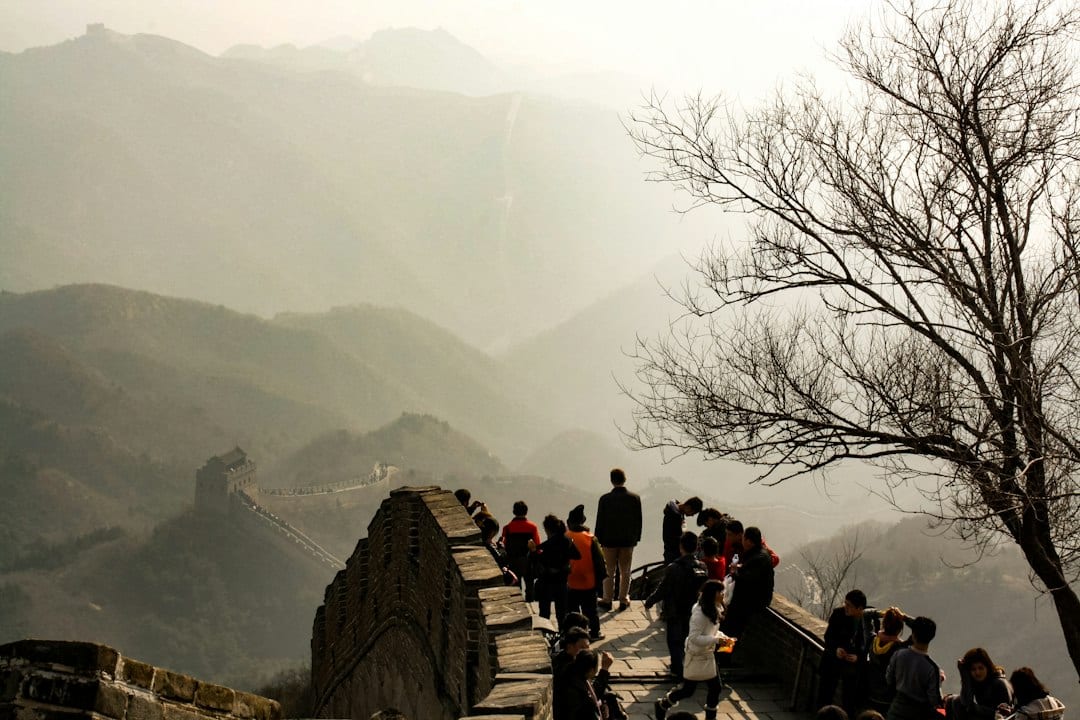
Dress in full windproof layers, bring hand warmers, and keep the visit to two hours or less. A private car with heating lets everyone warm up immediately afterward, and a late hotpot lunch back in the city becomes a welcome reward. If the wind is strong or the AQI is poor, this is the day to postpone and swap in the Summer Palace or Temple of Heaven instead.
Day 3 — Hutong Walks, Local Food, and Indoor Culture
Hutong neighborhoods such as Shichahai, Nanluoguxiang, or the quieter lanes around Dashilar are ideal on a cold but calm morning. The walking is flat, the distances are short, and there are frequent courtyard cafés and shops to duck into. For families with a foreign spouse, this is a gentle introduction to ordinary Beijing life: a rickshaw ride, a visit to a local family's courtyard, or a dumpling-making class can turn abstract history into personal memory.
Lunch in a hutong restaurant gives everyone a chance to warm up, and the afternoon can be spent at the Capital Museum or the 798 Art District, depending on the group's interests. Both are fully indoors and stroller-friendly. If your children need a break from culture, an hour at a heated indoor ice-skating rink or a shopping mall play area is a perfectly legitimate part of a family itinerary.
Day 4 — Temple of Heaven and a Flexible Departure Day
If you have a fourth day, the Temple of Heaven is a wonderful final stop. The park is spacious, the central altar complex is compact, and locals practicing tai chi or playing cards add a living layer to the imperial architecture. In late November the surrounding woods are bare and sculptural, and early winter decorations sometimes begin appearing around the city even before the first real snow.
Use the afternoon for last-minute shopping at a heated mall or a relaxed tea ceremony, and keep the evening free for your departure or your onward train to Harbin.
What to Wear: The Beijing Transition Layering System
This is not yet full Harbin winter gear, but it is also not an autumn jacket trip. The key in Beijing in November is layered flexibility, because heated interiors can be very warm while stone palace courtyards and the Great Wall can feel sharply cold.
For adults and older children, we recommend:
- A thermal base layer or long-sleeve merino top.
- A warm mid-layer such as a fleece or light down sweater.
- A windproof down coat or parka that can be opened easily indoors.
- Warm trousers, wool socks, and comfortable walking shoes with some grip.
- A hat, scarf, and gloves, especially for the Great Wall and evening walks.
For grandparents, add extra warmth around the neck and feet, and consider packable hand warmers. For small children, bring a stroller cover or wind shield if you plan to use one around the Forbidden City or hutongs. The main difference from Harbin gear is that you do not need the extreme expedition-level clothing required for temperatures of −20°C or lower. In Beijing, a good down coat and windproof accessories are usually enough; save the heavy fur-lined boots and bulky snowsuits for the Northeast.
Why November Rewards Families: Crowds, Dining, and Early Winter Atmosphere
The most immediate benefit of a November visit is the relative calm. The October holiday crowds have gone, and the Christmas and New Year rush has not yet arrived. At the Forbidden City and the Great Wall, you can often take photographs without a wall of people in the background, and guides have more time to answer children's questions.
Restaurant reservations become easier, too. Popular Peking duck restaurants and family-style courtyard kitchens that book out weeks in advance during peak seasons are more accessible, and you can usually choose a civilized early dinner hour that suits grandparents and young children. This is also a good time to request milder versions of dishes for foreign spouses or elders who do not tolerate spice well; kitchens are less harried and more willing to adjust.
Toward the end of the month, Beijing begins its quiet lead-up to early winter decorations. You may see red lanterns and festive displays going up in shopping districts, and the bare trees along the hutong lanes give the city a calm, almost monochrome beauty. It is not the ice-and-snow spectacle of Harbin, but it has its own dignity, and it prepares the senses for what comes next.
Beijing to Harbin by High-Speed Rail: Linking Two Chinas in One Trip
One of the strongest reasons to visit Beijing in November is that it makes an ideal gateway to a Northeast China winter trip. From Beijing, high-speed rail connects directly to Harbin, allowing families to move smoothly from the capital's late-autumn calm to the full drama of the Harbin Ice and Snow World.
The journey is comfortable and family-friendly. Trains are heated, seats are spacious by rail standards, and the dining car or trolley service means you do not have to pack a full meal. For multi-generational groups, we usually recommend booking first-class seats or business-class seats so everyone has room to stretch, and arranging a private transfer at the Harbin end so no one has to wait in a cold taxi queue.
The most common pattern we design is three or four days in Beijing followed by four or five days in Harbin and the surrounding area. This gives the family time to adjust to the time zone, experience China's imperial heritage, and acclimatize to cooler temperatures before heading into real winter. It also spreads the physical demands of the trip so that grandparents are not exhausted by day two.
For more ideas on combining the two cities, see our Beijing travel guide and the broader route options we offer for families.
Practical Notes for a Smooth Family Trip
A few logistical details can make or break a November family visit to Beijing:
- Book attractions in advance. The Forbidden City and the National Museum still require real-name reservations, and foreign passports must match the booking exactly.
- Carry passports. Security checks are routine at major sites and train stations, and everyone needs original ID.
- Prepare mobile payments. WeChat Pay and Alipay are increasingly open to foreign cards, but setup can take time. Carry some cash as backup, especially for small hutong shops.
- Choose accommodation near a subway line. Being able to retreat to a warm hotel quickly matters more in November than in milder months.
- Build in rest. A two-hour palace visit followed by a two-hour museum visit is plenty for a multi-generational group. Quality matters more than quantity.
Ready to Plan Your Beijing and Harbin Family Journey?
Beijing in November is not about ticking off every sight. It is about giving grandparents the Great Wall they have imagined, giving children space to ask questions in a quieter palace, and giving the whole family a gentle transition before the deep winter of the Northeast. With the right pacing, the right layers, and the right backup plans, it becomes one of the most rewarding family stops in China.
Contact our bilingual travel consultants to design a Beijing and Harbin itinerary that matches every generation's pace, comfort, and curiosity.
Related Reading
- Beijing Travel Guide — destinations, seasons, and family tips
- Beijing to Harbin High-Speed Rail 7-Day Family Route
- Beijing Hutong Breakfast Walk — A Gentle Food Tour


