


You want your parents to see the Chongqing they remember from old films, your kids to understand why a city can be built straight up a cliff, and your partner—who may never have been to China—to feel comfortable at the dinner table. Chongqing delivers all of that, but its famous hills, heat, and vertical streetscapes can turn a family vacation into an endurance test if the pacing is wrong.
This guide is written for overseas Chinese families, intercultural couples, and international visitors traveling with children and/or senior parents. It pairs the headline sights with realistic logistics: where the stairs are, where the elevators are, how to eat hotpot without tears, and how to keep October evenings pleasant rather than exhausting. For a broader overview of the city, see our Chongqing travel guide.
At a Glance
- Best window: mid- to late October, after the National Day holiday crowds thin out.
- Recommended stay: 4 days and 3 nights, with a 3-day compressed option below.
- Biggest challenge: vertical terrain, summer-like humidity lingering into early autumn, and long queues at the cableway.
- Must book ahead: Yangtze River Cableway timed tickets and Wulong Karst entry.
- Mobility strategy: one elevation-heavy activity per day, private car between distant sites, and baby carriers preferred over strollers in the old town.
Why Chongqing Can Be Hard on Multi-Generational Groups
Chongqing is one of China’s most dramatic urban landscapes: two major rivers, steep hills, and a city that seems to stack 20-story buildings on top of one another. A “ground floor” on one street can be the 11th floor on the next. That verticality is part of the magic, but it also means long stairways, uneven cobblestones, humid air, and taxi drops that may not be where you expected.
For families, the risk is pacing. A morning at Ciqikou, an afternoon at Hongyadong, and an evening cableway ride sounds efficient on paper, but it can leave grandparents sore and children cranky. The answer is not to skip the hills—it is to choose one hill per day and use Chongqing’s cable cars, elevators, and riverside walkways as your allies.
How to Experience the Vertical City Without Exhausting Everyone
1. Choose a Flat Base Near the Action
Stay in Jiefangbei or along the Chaotianmen / Raffles City riverfront. These areas have level pedestrian zones, metro access, malls with food courts, and plenty of taxis. A river-view room also lets you enjoy Hongyadong’s light show from an air-conditioned balcony rather than fighting the crowds below.
2. Use Private Transfers for Day Trips
Chongqing’s metro is modern, but transferring with a stroller, senior, and luggage is tiring. For Dazu and Wulong, a private car with a bilingual driver saves hours and lets the group rest between sights. Within the city, Didi works well and is usually faster than hailing a taxi on a busy hill.
3. View Hongyadong, Don’t Necessarily Climb It
Hongyadong’s interior is a maze of souvenir shops, escalators, and staircases. With small children or anyone with limited mobility, the best experience is from the outside: the Qiansimen Jialing River Bridge or a short Yangtze river cruise. You get the postcard view without the climb.
4. Build in Rest Stops
Plan 90-minute activity blocks followed by seated breaks. Teahouses, mall cafés, hotel lobbies, and riverside benches are easy to find. A slower pace is not “missing out”—it is how locals enjoy the city.
A 4-Day Family Route
This itinerary assumes you arrive in Chongqing by midday on Day 1 and depart in the evening of Day 4. Each day balances one major sight with plenty of downtime.
Day 1 — Arrival, Jiefangbei & Hongyadong by Night
Morning / afternoon: Settle into your hotel and take a flat walk through the Jiefangbei pedestrian zone or the air-conditioned Raffles City mall. This is a low-pressure introduction to the city’s scale.
Evening: Have an early family dinner near the hotel, then head to the Qiansimen Bridge for the Hongyadong light show (best around 19:30–20:30). The riverside promenade is mostly level. If energy allows, add a 45-minute seated river cruise; if not, the bridge view is enough.
Mobility notes: About 4,000–5,000 steps, mostly flat. Avoid descending into Hongyadong itself with a stroller or anyone unsteady on stairs.
Day 2 — Ciqikou Old Town & Yangtze Cableway
Morning: Arrive at Ciqikou Ancient Town by 8:30, before the tour buses. The main street is cobblestoned but relatively flat; side alleys and teahouse courtyards involve steps. This is a good place to let children watch sugar painting or try pottery painting while grandparents browse tea shops.
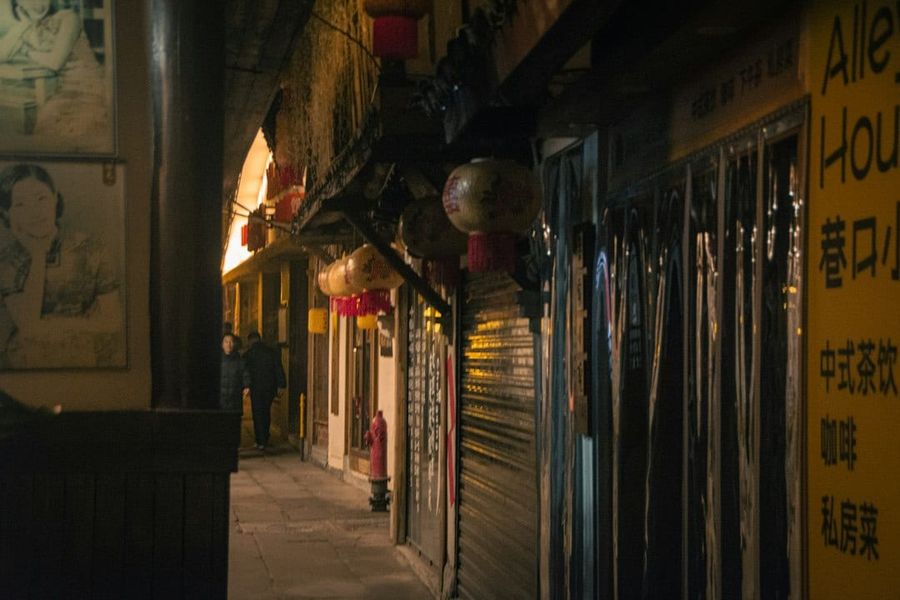
Afternoon: Take the Yangtze River Cableway. Book a timed ticket in advance and aim for a midweek, mid-afternoon slot to shorten the queue. The ride itself is only about four minutes, but the aerial view of the river, cranes, and cliff-side buildings is unforgettable.

Mobility notes: Ciqikou is stroller-difficult and wheelchair-challenging because of cobblestones and narrow lanes. A baby carrier is much easier here. The cableway stations have elevators, but there is a small step up into the cabin; staff are usually happy to assist.
Day 3 — Dazu Rock Carvings
Full-day trip: The Dazu Rock Carvings (Baodingshan section) are about 1.5 to 2 hours by car from central Chongqing. The site is a UNESCO-listed open-air gallery of Buddhist, Daoist, and Confucian stone sculptures. A local guide or audio explanation really helps children and foreign spouses understand what they are seeing.
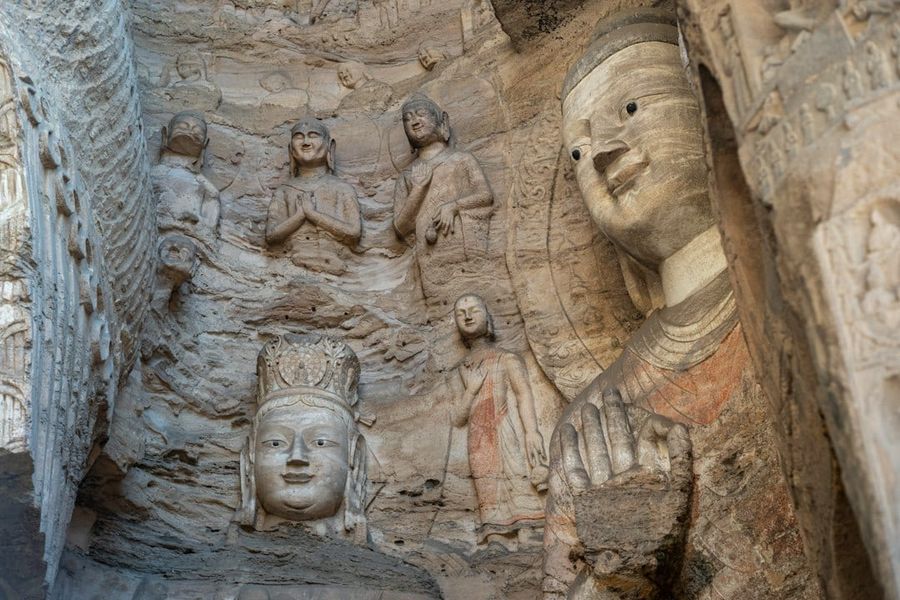
Mobility notes: Baodingshan’s main loop is paved and mostly gentle, with benches and pavilions for rest. It is the most senior-friendly of the major sights on this route. Some individual grottoes require short staircases, but these can be skipped without missing the highlight reel.
Logistics: Leave by 8:00, explore 2.5–3 hours, have lunch in Dazu town, and return to Chongqing by late afternoon.
Day 4 — Wulong Karst Day Trip
Full-day adventure: Wulong Karst National Park is roughly 2 to 2.5 hours from Chongqing. The highlight for families is the Three Natural Bridges: three massive limestone arches inside a green gorge. An elevator takes you most of the way down, and the boardwalk between the bridges is spectacular.
Mobility notes: This is the most physically demanding day. There are many steps, uneven surfaces, and no viable wheelchair route. Active seniors who walk regularly can manage with trekking poles; younger children should be in a carrier or hold hands carefully. If anyone in the group has serious knee or balance issues, swap this day for a relaxed city walk and a cooking demonstration.
Logistics: Depart by 7:00, pre-book tickets with passport details, and plan 2.5–3 hours inside the gorge. Bring water, light rain gear, and snacks. Return to Chongqing by early evening.
3-Day Compressed Option
If you have only three days, keep Day 1 and Day 2 as written, then choose either Day 3 (Dazu) or Day 4 (Wulong) based on mobility. Dazu is better for groups with seniors or strollers; Wulong is better for active families with school-age children.
Walking, Stairs & Wheels: A Practical Mobility Guide
| Site | Walking Intensity | Stroller / Wheelchair | Rest Stops |
|---|---|---|---|
| Hongyadong (exterior view) | Low; mostly flat riverside | Fine | Riverside benches, mall cafés |
| Hongyadong (inside) | High; many stairs and escalators | Not recommended | Restaurants, but crowded |
| Ciqikou | Moderate; cobblestones, side steps | Difficult | Teahouses, riverside cafés |
| Yangtze Cableway | Low; mostly standing in queue | Possible with assistance | Station waiting hall, cafés at Nanbinlu |
| Dazu Rock Carvings | Moderate; paved gentle loop | Main path is feasible | Benches and pavilions throughout |
| Wulong Three Natural Bridges | High; steps, uneven boardwalks | Not feasible | Limited; bring walking poles |
Hotpot, Street Snacks & Allergy-Aware Ordering
Hotpot Without Tears
Hotpot is a communal, theatrical meal and a great way to explain Chongqing culture to a foreign spouse: everyone cooks thin slices of meat, vegetables, and noodles in a shared bubbling broth. The default Chongqing broth, however, is very spicy and very oily.
Order a yuanyang (half-and-half) pot: one side mild tomato or mushroom broth, the other side spicy for the brave. Ask for bù là (not spicy) or wēilà (mildly spicy). Kid-friendly choices include fish balls, beef meatballs, sliced lamb, tofu, sweet potato noodles, and leafy greens. Dip cooked items in sesame oil with minced garlic to cool them down.
Street Snacks for Small Appetites
Ciqikou is ideal for grazing. Look for:
- Mahua — twisted fried dough, often sweet or sesame-flavored.
- Ciba — soft sticky-rice cakes, usually mildly sweet.
- Douhua — silken tofu pudding, served sweet in Chongqing.
- Roasted sweet potato — sold from street carts in autumn.
- Xiaomian — Chongqing noodles; order plain or with the chili sauce on the side.
Allergy & Dietary Notes
Common allergens in Chongqing food include sesame, peanuts, soybean/gluten, shellfish, and chili. If a family member has allergies, carry a printed card in Chinese explaining the restriction. Avoid uncooked street seafood or undercooked meats for children, and choose busy stalls with high turnover.
October Evenings, Heat & Air-Conditioning
Early October in Chongqing can still feel like late summer: daytime temperatures around 22–27 °C (72–81 °F) with lingering humidity. The first week of October also coincides with the National Day holiday, so major sights are crowded. From mid-October onward, temperatures ease to a more comfortable 17–24 °C (63–75 °F), though fog is common.
October pacing tip: Schedule outdoor walking before 11:30 and after 15:30. Use the middle of the day for a long, air-conditioned lunch or a hotel rest. Keep evening outings under two hours and aim to be back by 21:00.
Air-conditioning is standard in hotels, shopping malls, restaurants, and taxis, but it can be aggressive. Pack a light cardigan or overshirt for indoor spaces. Rain showers are possible, so a compact umbrella or light rain jacket is useful.
Budget & Booking Notes
For a family of four traveling at a comfortable mid-range level, expect roughly:
- Hotel: ¥700–1,500 per night for a quality family room or two connecting rooms near Jiefangbei.
- Private car & driver: ¥600–900 per day for Dazu or Wulong.
- Meals: ¥250–500 per day depending on hotpot and snack stops.
- Attractions: ¥150–300 per adult for cableway, Dazu, and Wulong combined; children and seniors usually receive discounts.
Book the Yangtze Cableway and Wulong at least a few days ahead, especially for weekend slots. Dazu is less crowded but still benefits from advance ticketing. Keep passports handy—many attractions require passport numbers for online booking, and foreign cards may not always work on Chinese apps, so have WeChat Pay or Alipay set up or carry sufficient cash.
When It Helps to Have a Local Hand
Chongqing rewards planning, but the logistics can be tricky from abroad: which cableway ticket window accepts passports, how to avoid the steepest entrance at Hongyadong, where to find a clean restroom with baby-changing facilities, and how to explain “no peanuts” in a busy hotpot restaurant.
If you would rather focus on your family than on tickets, translations, and transfers, our Chongqing specialists can build a private route around your group’s pace. We arrange bilingual guides, accessible vehicles, family-friendly restaurants, and backup plans for rain or fatigue. Start with our Chongqing travel guide or reach out to discuss your dates.
Frequently Asked Questions
Is Chongqing suitable for a stroller?
Only partly. Modern districts, malls, and the Dazu main path are fine, but Ciqikou’s cobblestones and Wulong’s steps make a stroller impractical. A lightweight carrier is more useful than a bulky stroller in the old town.
Can seniors manage Chongqing’s hills?
Yes, if you limit stair-heavy sites to one per day and use elevators, cable cars, and private transfers. Dazu is the gentlest major sight; Wulong is the most demanding.
How spicy is Chongqing food for children?
It can be very spicy, but almost every restaurant can prepare mild broths, plain noodles, steamed rice, and non-spicy side dishes. Ask clearly and do not assume “just a little spicy” means the same thing as home.
Is October a good month to visit Chongqing with family?
Mid- to late October is one of the better windows: cooler than summer, less crowded after National Day, and still warm enough for evening walks. Early October is hotter and busier.